
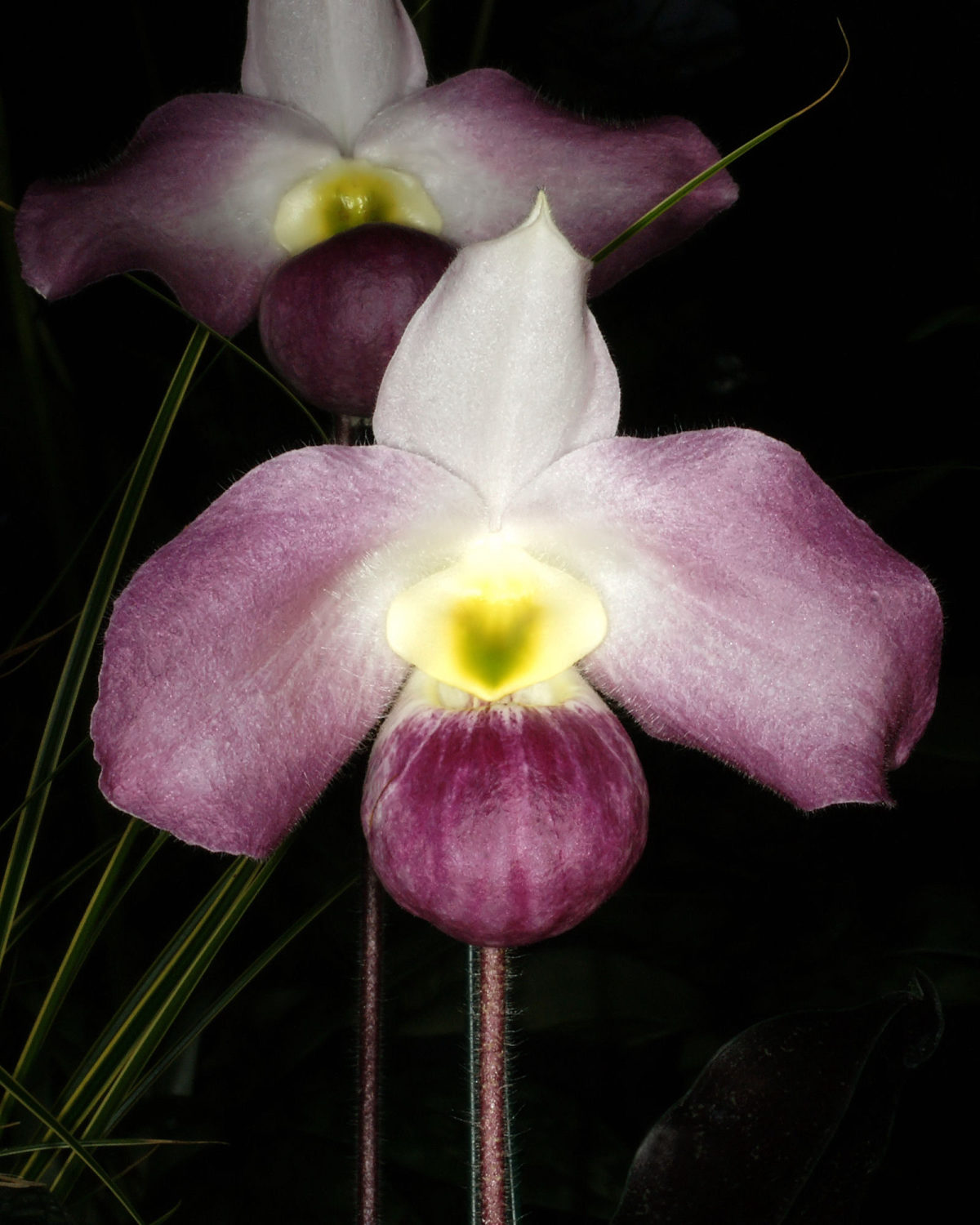
Paphiopedilum vietnamense A cultivated specimen of the Vietnamese Slipper Orchid, photographed in 2014. First described to science in 1999, the species was almost immediately stripped from its wild northern Vietnamese range by collectors; fewer than fifty mature individuals are thought to remain. Photograph: Orchi, March 2014 · CC BY-SA 3.0 · sourced from Wikimedia Commons.
Sixty-three years separate these two views. On the left, the war that touched everything around the orchid's home. On the right, the limestone karst as it looks today.
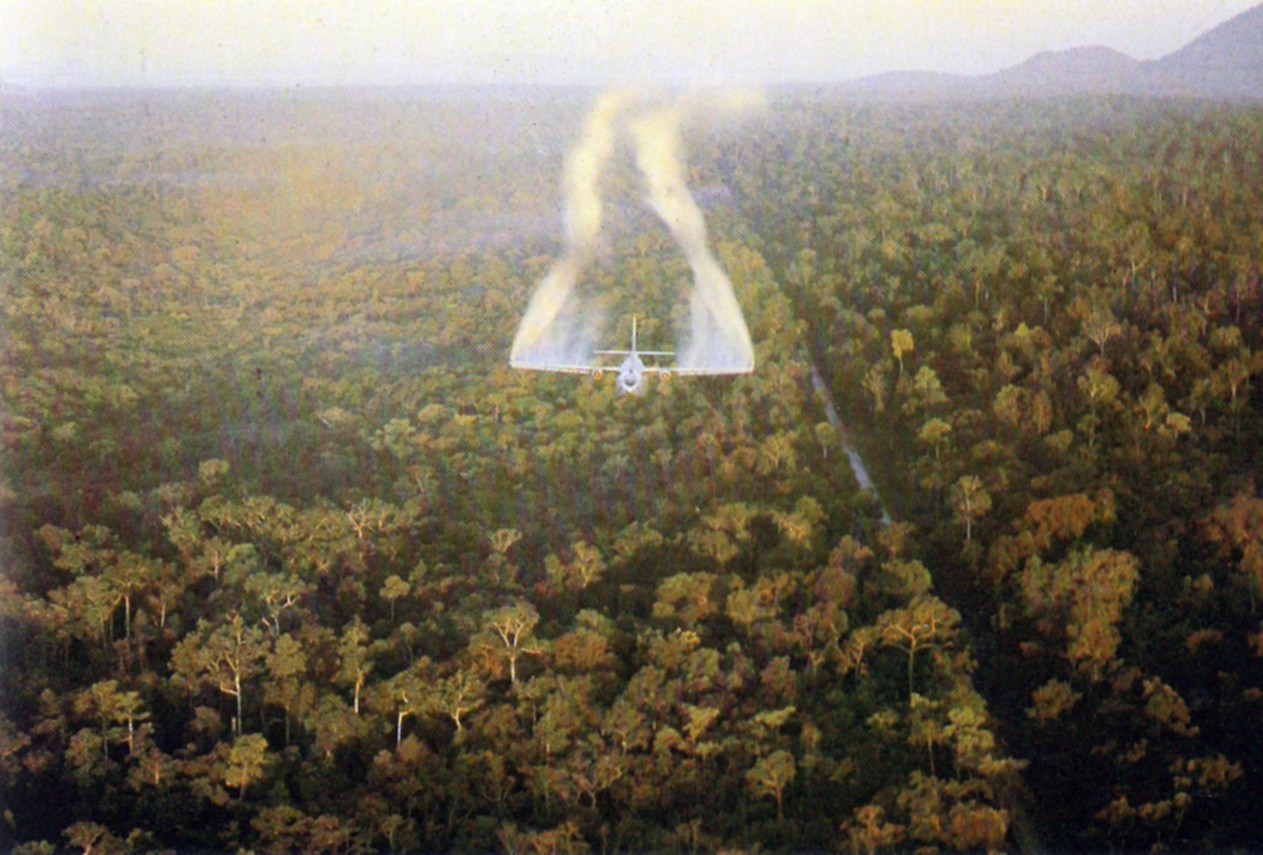 1962
Operation Ranch Hand · Before
1962
Operation Ranch Hand · Before
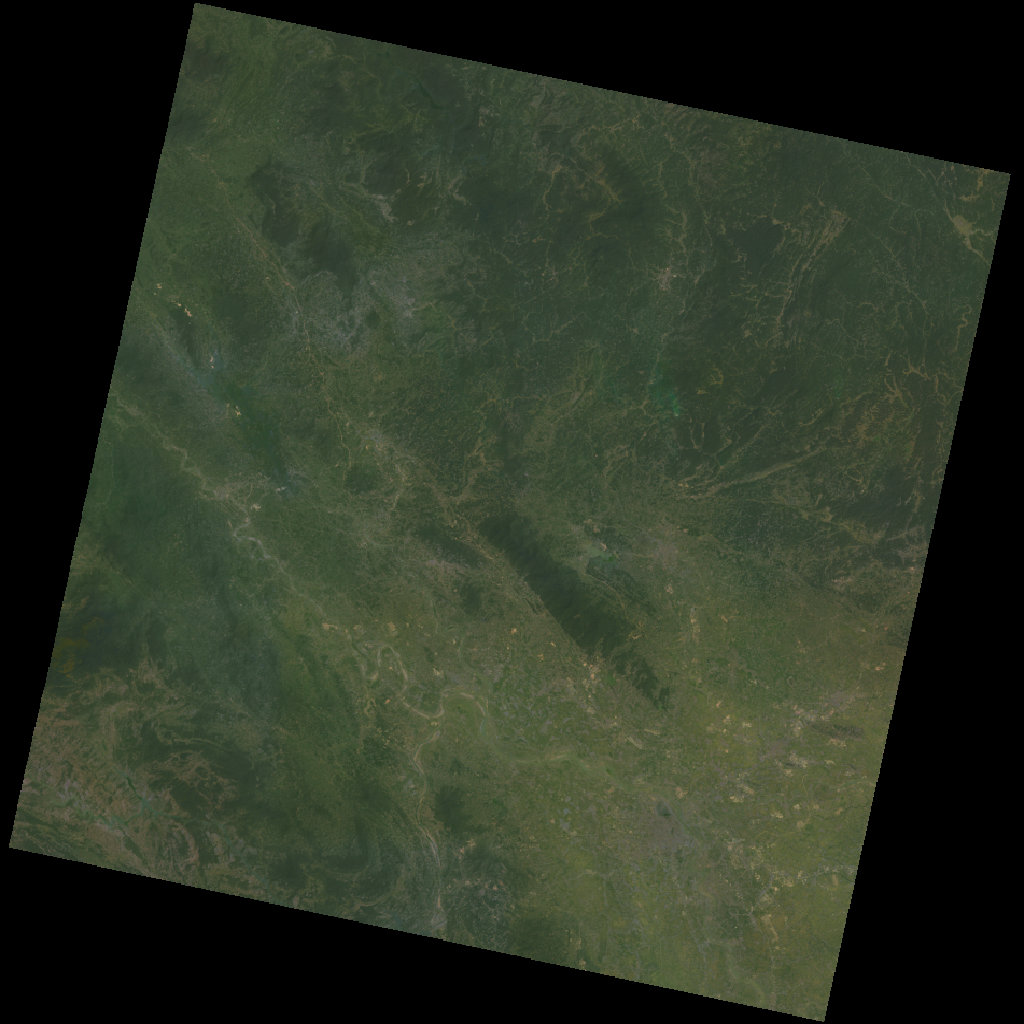 22 March 2025
Hà Giang karst · After
22 March 2025
Hà Giang karst · After
1962 — Ranch Hand begins A US Air Force UC-123B Provider spraying defoliant over forest in South Vietnam, in the first year of Operation Ranch Hand. Roughly twenty million gallons of herbicide would be sprayed across Vietnam, Laos and Cambodia by 1971. The northern karst was not the primary target, but the war reshaped logging, roads and access across the country — and the silent secret of Paphiopedilum vietnamense ended in 1999, when collectors arrived almost as quickly as botanists did.
22 March 2025 — Hà Giang karst at peace Landsat 8, Path 127 / Row 045, acquired with 0.01 per cent cloud cover. The orchid's range is somewhere inside the dense green of these limestone hills, in shaded ravines between 500 and 800 metres — the precise canyons are withheld for the species' protection. The narrow ridges that give the karst its character were too steep, too high and too remote to be a priority for the spray missions of the previous decade.
Imagery — 22 March 2025: NASA / USGS · Landsat 8 OLI Collection 2 Level-2 · Path 127, Row 045. Public domain. Sourced via Microsoft Planetary Computer (USGS Landsat archive). 1962: US Air Force photograph of a UC-123B Provider on a Ranch Hand spray mission over South Vietnam. Public domain (US federal government work) · sourced from Wikimedia Commons.
Some plant locations in this series are shown at regional scale only. For species vulnerable to illegal collection, precise coordinates are deliberately not published — a practice followed by Oya and by the conservation custodians who shared the original research. Knowing where, in general, is enough to tell the story. Knowing exactly where would put the species at risk.
Paphiopedilum vietnamense
First described to science in 1999, Paphiopedilum vietnamense was a botanical secret known only to a handful of researchers and a much wider network of orchid collectors who arrived almost simultaneously. Within a few seasons, entire wild populations were stripped from the limestone cliffs of northern Vietnam. The species survives — mostly in cultivation, scarcely at all in the wild — as a quiet reminder that publication of a discovery can be its own kind of threat.
Quick facts
- Family
- Orchidaceae (orchid family) — the largest family of flowering plants
- Described to science
- 1999, by Olaf Gruss & Roland Perner — twenty-four years after the Vietnam War ended
- IUCN status
- Critically Endangered (assessed 2015)
- Wild population
- Fewer than fifty mature individuals on the karst cliffs of Hà Giang and Bắc Kạn provinces
- Habitat
- Cool, shaded ravines in limestone karst forest, between 500 and 800 m elevation — a microclimate the species has occupied for an unknown number of millennia
- Habitat protection
- Đồng Văn Karst Plateau UNESCO Global Geopark (inscribed 2010); precise wild sites withheld by Vietnamese botanical authorities
- Insurance population
- Cultivated specimens in botanical gardens worldwide, including Edinburgh, Munich and Kew — most descended from the early collected material that emptied the wild canyons
- Conflict that touched it
- Operation Ranch Hand (1961 – 1971): the United States military sprayed ~20 million gallons of herbicides across Vietnam, fragmenting forest, opening roads, and accelerating decades of post-war land-use change
- Primary threat today
- Illegal collection for the international horticultural trade — the same pressure that began the day the species was first published
A secret cathedral of limestone and mist
For thousands of years the limestone karst of northern Vietnam was a place of secret cathedrals. Mossy cliffs rose from valley floors. Shaded ravines held cool, damp air year-round. In these protected microclimates, a small orchid bloomed each spring — pale yellow petals streaked with maroon, a slipper-shaped pouch.
The forests around it teemed with life: hornbills, gibbons, civets, hundreds of plant species adapted to the porous stone. The people who lived nearby — Tay, Nung, Hmong — knew the forests as a source of food, medicine, and shelter. The slipper orchid was simply one detail in a much larger ecosystem, neither famous nor protected. It would not be formally described by Western science until 1999.
Twenty million gallons, over ten years
Between 1961 and 1971, the United States military sprayed approximately 20 million gallons of herbicides over the forests, fields, and waterways of Vietnam, Laos, and Cambodia. The most infamous of these — Agent Orange — was contaminated with dioxin, one of the most toxic substances ever produced.
Operation Ranch Hand targeted lowland forests, mangroves, and crops. Roughly three million acres of forest were destroyed. The mangroves of the Mekong Delta were particularly devastated; the triple-canopy forests of the central highlands stripped of leaves.
The limestone karst of the north, where the slipper orchid grows, was less directly sprayed — but the war touched everything. Logging accelerated. Roads cut through previously isolated valleys. Habitats were fragmented even where no defoliant fell.
A species described, then almost immediately lost
Half a century later, the chemical signature of Operation Ranch Hand still lingers — in the soil, in groundwater, and in the bloodstreams of those exposed. Vietnam's forests have partially returned, though dioxin hotspots like Bien Hoa Air Base required decades of remediation.
The Vietnamese Slipper Orchid was formally described as a new species in 1999, twenty-four years after the war ended. It was almost immediately threatened: collectors paid hundreds of dollars per plant, and entire wild populations were stripped within a few seasons.
Today, fewer than fifty wild individuals are thought to remain. The orchid survives mostly in cultivation — in botanic gardens and private collections worldwide — present, but no longer wild.
Timeline
- 1961First Agent Orange test flights begin
- 1962Operation Ranch Hand formally launched
- 1965 – 1969Peak spraying years
- 1971Operation Ranch Hand ends after international outcry
- 1999Paphiopedilum vietnamense formally described as a new species
- 2007Vietnam–USA Joint Advisory Committee on Agent Orange established
- 2010Đồng Văn Karst Plateau inscribed as a UNESCO Global Geopark
- 2015IUCN Red List assessment: Critically Endangered; fewer than 50 mature individuals estimated to remain in the wild
Incidents on the map
| Date | Place | Description | Source |
|---|---|---|---|
| 1962 | A Shau Valley, Thừa Thiên-Huế | Initial spraying tests on triple-canopy forest | Stellman et al., 2003 |
| 1965 – 1970 | Mekong Delta mangroves | Sustained defoliation of coastal mangroves | Hong & San, 1993 |
| 1969 – 1970 | Quảng Trị Province (former DMZ) | Heavy defoliation along the former demilitarised zone | US Defense Dept. records |
| 1971 | Củ Chi District, Hồ Chí Minh City | Final large-scale Agent Orange operation | Stellman et al., 2003 |
| 2010s | Northern Vietnam karst region | Wild slipper orchid populations stripped by collectors | IUCN Red List, 2015 |
Key statistics
Sources and citations 7 references ›
- Stellman, J.M., et al. (2003). "The extent and patterns of usage of Agent Orange and other herbicides in Vietnam." Nature, 422, 681–687.
- Averyanov, L.V., et al. (2003). Slipper Orchids of Vietnam. Royal Botanic Gardens Edinburgh.
- IUCN Red List (2015). Paphiopedilum vietnamense species assessment.
- Hong, P.N. & San, H.T. (1993). Mangroves of Vietnam. IUCN.
- US Defense Department records of Operation Ranch Hand spray missions.
- NASA / USGS (2025). Landsat 8 OLI Collection 2 Level-2 surface reflectance scene of northern Vietnam, Path 127 / Row 045, 22 March 2025. Public domain. Sourced via the Microsoft Planetary Computer mirror of the USGS Landsat archive.
- US Air Force (1962). A U.S. Air Force Fairchild UC-123B Provider 'Ranch Hand' aircraft spraying defoliant next to a road in South Vietnam in 1962. Public domain. Sourced from Wikimedia Commons: commons.wikimedia.org.
