The oldest botanical gardens in the Americas were built to move plants for profit. Their descendants now race to keep the region's plants from disappearing. Four plants tell that story.
In 1765, on the volcanic slopes of St. Vincent, the British laid out the first colonial botanical garden in the Western Hemisphere, with James Anderson as its first curator. It was not built to protect the island's plants. It was infrastructure — a living warehouse in a trade that moved coffee, cocoa, clove, nutmeg and pepper around the world. The colonial gardens were propagating stations that fed Kew at the centre of the web, and the business of moving plant material between them ran on intrigue, on theft, and on cooperation in roughly equal measure.[6]
The islands these gardens were planted into were neither empty nor untouched. They had been home to Arawak and Carib peoples long before any European arrived, and on St. Vincent the Caribs mounted a long and determined resistance to colonial control. Onto that contested ground came the sugar economy. Across Barbados and Jamaica especially, plantation agriculture cleared the forests at speed — the work done by enslaved people — and drained the soils almost as fast as the cane could be cut.[7,9]
The most famous single act of this trade passed through the St. Vincent garden: in 1793, Captain Bligh delivered breadfruit from Tahiti, a cheap, calorie-dense crop intended to feed enslaved people more cheaply. Yet the same colonial system also produced one of the earliest gestures toward conservation law — the Kings Hill Enclosure Ordinance of 1791, which set aside forest on St. Vincent in the belief that the trees would draw rain. The instinct to extract and the instinct to protect sat inside the same institutions from the very start.[8]
The turn — when the region's gardens began to act, together, on behalf of the region's own threatened plants — is recent, and it can be dated. Through the 1990s, Botanic Gardens Conservation International ran a three-year Caribbean programme, concluding in 1998, with workshops in the Cayman Islands (1996), Barbados (1997) and Jamaica (1998), and out of them a regional Conservation Action Plan. The 1998 Jamaica workshop, where the plan was launched, was hosted by the Royal Botanic Gardens at Hope, in Kingston — the garden that is today Oya's Jamaica pilot. In 2002, at Fairchild Tropical Garden in Miami, the network formalised itself as the Caribbean Botanic Gardens for Conservation.[4,5]
The four plants below trace that inversion. The first survives only because the founding garden of empire now keeps it alive. The second carries an island's name but was erased from that island by sugar. The third is a Jamaican endemic at the centre of Oya's own pilot. The fourth is a survivor from deep time whose world has quietly stopped working around it.
 Oya artwork
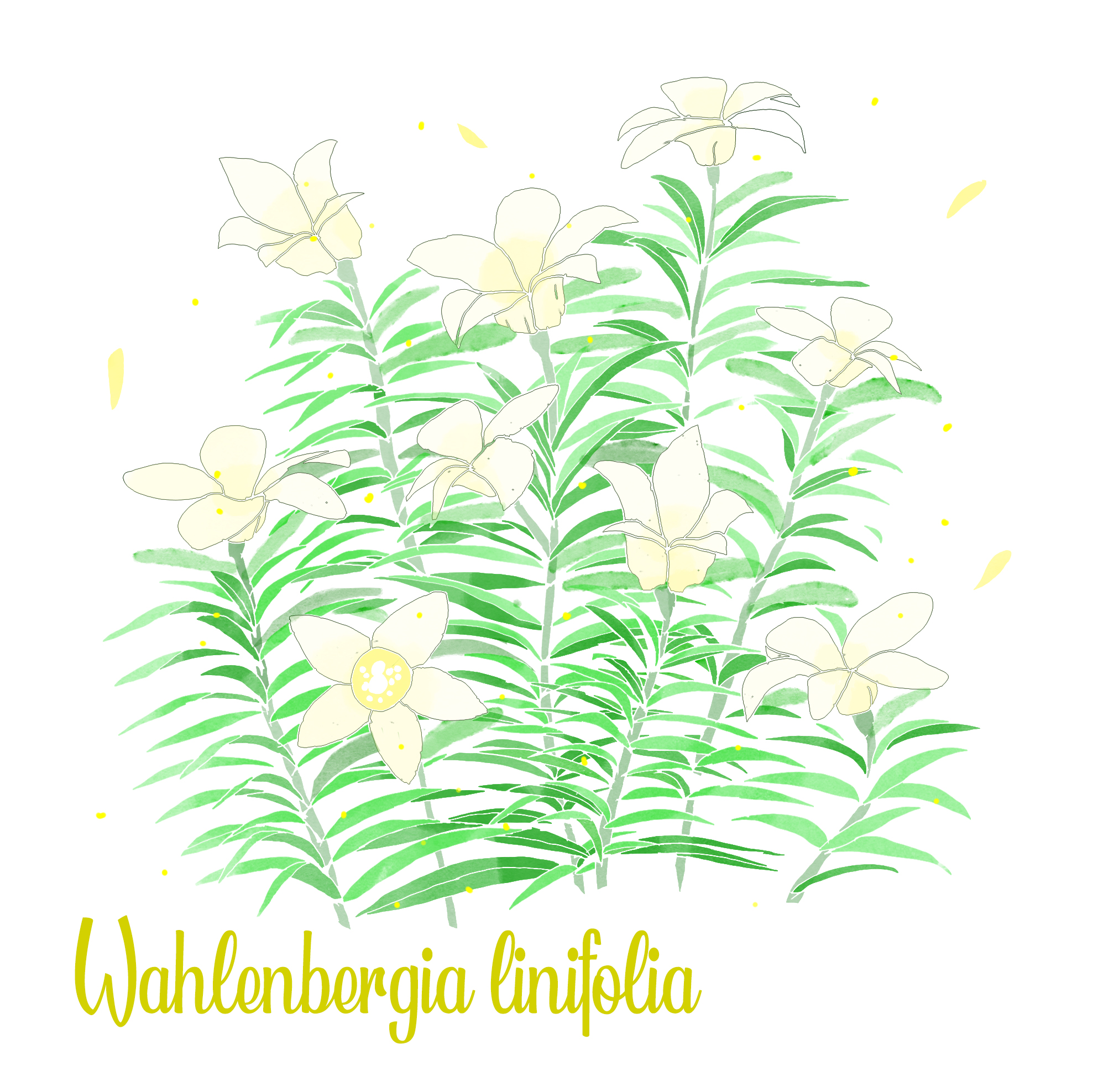
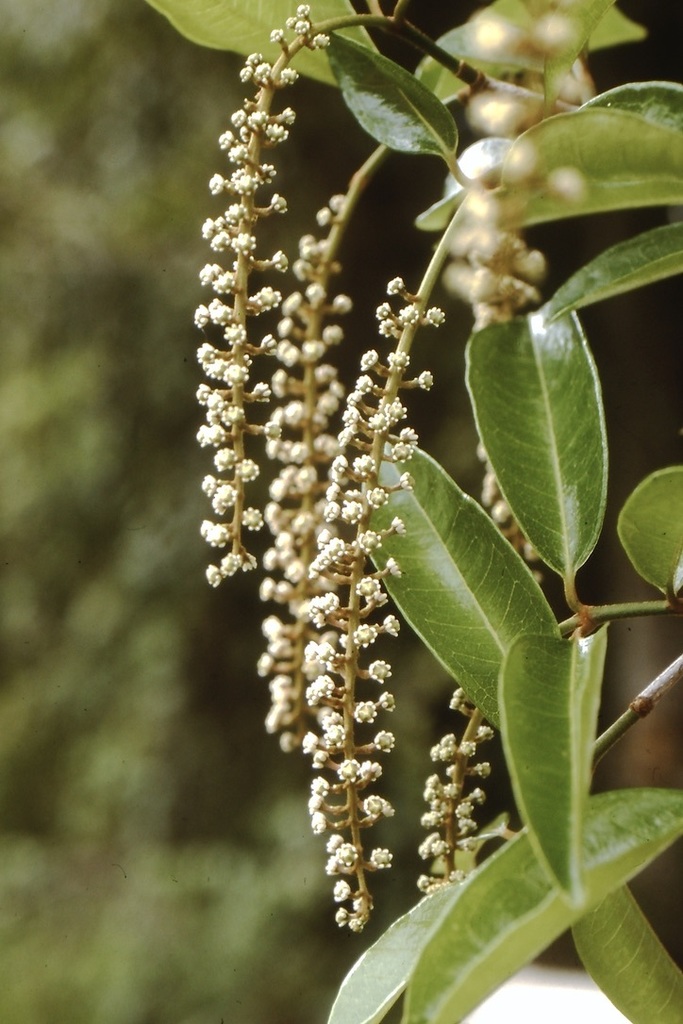
The Soufriere Tree takes its name from La Soufrière, the volcano on whose slopes it was found, and it holds the rare distinction of being a nation's official flower. It is a modest-looking member of the Malpighiaceae, with simple lance-shaped leaves and small, pale-pink flowers carried in hanging sprays. Its fame in St Vincent is out of all proportion to its size — and so is its precariousness.
Here honesty matters more than legend. Plants of the World Online, Kew's authoritative taxonomic database, treats Spachea perforata as a synonym of Spachea elegans — a species that is in fact widespread across the mainland Neotropics, from Cuba and Panama through northern South America. By that reading the Soufriere Tree is not a St Vincent endemic at all, and it carries no threatened global assessment. Its situation is the same one the Lady's Slipper Orchid occupies on our Swiss page: globally secure, locally almost gone.[2]
A dual status, held honestly. Globally, this is a common, secure species with no threatened IUCN listing. Locally, in St Vincent, it has all but vanished. Both things are true at once — and the local story is the one this page is about.
By accounts from the island, the wild trees were largely destroyed by an early-nineteenth-century hurricane, and the plant now persists chiefly as a cultivated specimen at the St Vincent Botanical Gardens — the very garden founded in 1765 as an instrument of empire. The institution built to move the plants of empire is now the reason this one still exists at all.[11]
Not global rarity but local collapse: a tiny island population, exposed to hurricanes, apparently unable to reproduce from seed, and dependent on deliberate human propagation to continue. A reminder that a plant can be common somewhere and vanishing somewhere else — and that the somewhere else still matters.
 Oya artwork
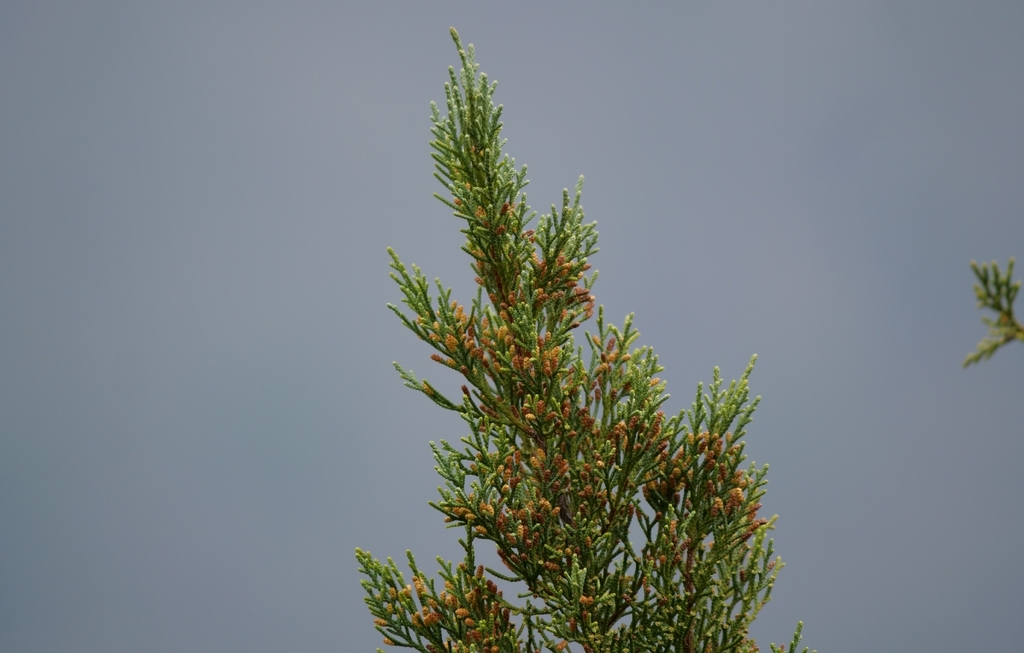
Few plants tell the empire-to-survival story as bluntly as this juniper. It bears the island's name, and it was once part of the Barbadian landscape. But Barbados was among the islands most completely transformed by the sugar economy: its forests were felled early and almost entirely, the land turned over to cane by enslaved labour. The Barbados Cedar was cut out before about 1700, and its habitat went with it. The tree named for Barbados is now extinct in Barbados.[3]
What remains of the variety is a single wild population clinging to the upper slopes of Petit Piton on St Lucia — on the order of fifty mature trees, in an area smaller than a few city blocks. A species reduced to one mountainside is a species with no margin for error.[1,3]
The historic driver was wholesale clearance for agriculture — the same plantation clear-cutting that reshaped Barbados and Jamaica. What survives now faces the ordinary hazards that become existential at such tiny numbers: fire, disease, and the hurricanes that periodically sweep the Lesser Antilles.
The wild trees on St Lucia's Pitons should be left undisturbed; precise locations are not publicised. The species' value here is as a witness — the clearest case in the region of a plant erased from its namesake island by the plantation economy.
 Oya artwork
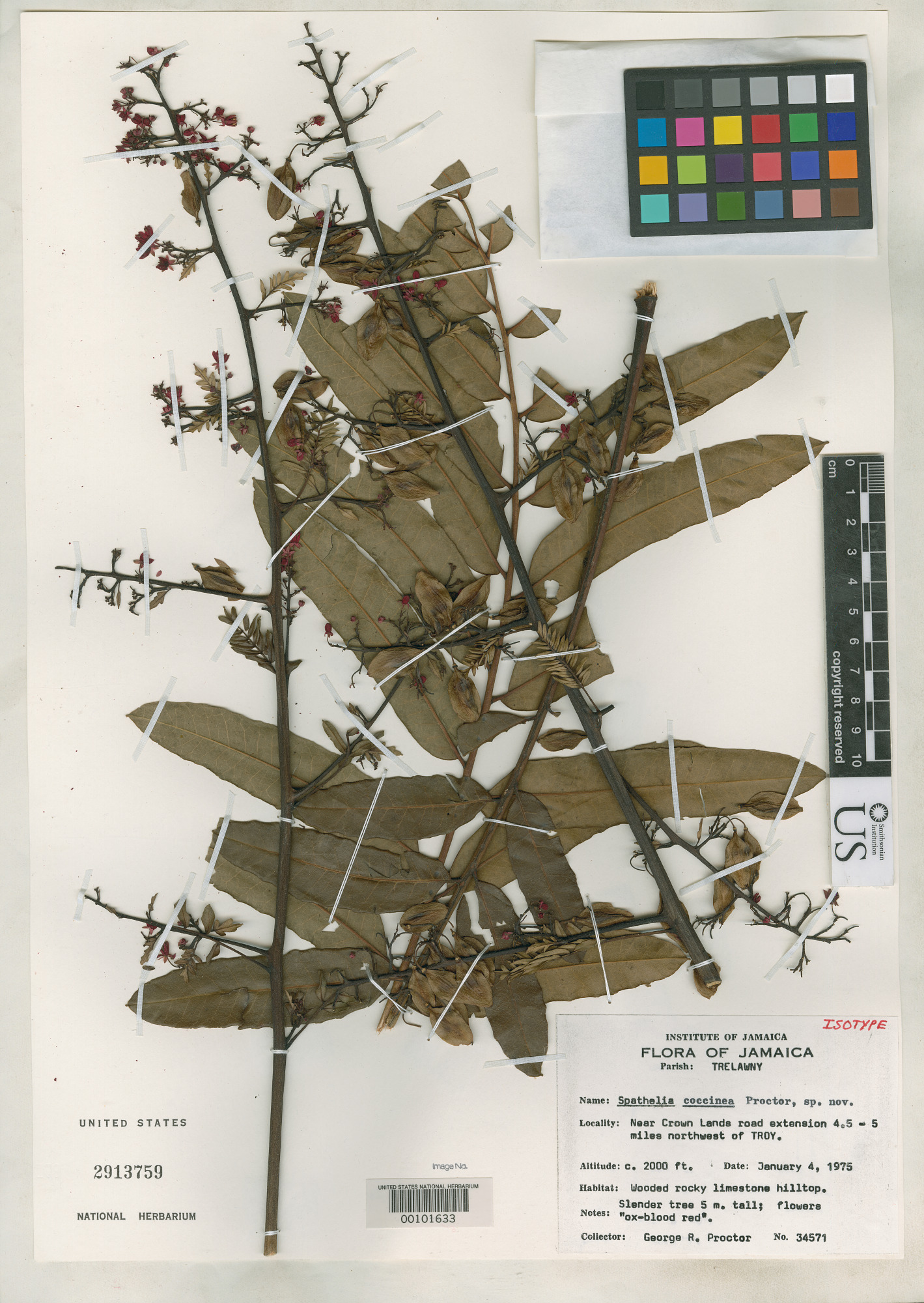
Spathelia coccinea belongs to the citrus family, the Rutaceae. Its species name, coccinea, is Latin for scarlet, and it earns it: when the tree finally flowers, it raises a towering, branched spire crowded with small red flowers, far above the slender trunk that produced it. It is monocarpic — it grows for years, flowers once in a single spectacular burst, sets seed, and dies. One flowering, one chance.
The genus Spathelia is a Caribbean speciality, and Jamaica is its heartland; S. coccinea is one of several found on this island and no other. Its newest IUCN assessment, dated 19 November 2024 and authored by Keron Campbell of the Natural History Museum of Jamaica, places it as Critically Endangered. It is already an Oya Portrait, and it sits at the heart of Oya's Jamaica pilot, anchored to the garden at Hope — the same garden that hosted the launch of the regional Conservation Action Plan in 1998.[1,4]
Habitat loss across a naturally restricted range. For a plant that reproduces only once in its life, losing mature individuals before they flower — or losing the conditions their seedlings need — can quietly end a population without any single dramatic event.
No ex situ collection of this species is currently known to exist — no botanic garden, living collection or seed bank is recorded as holding it.
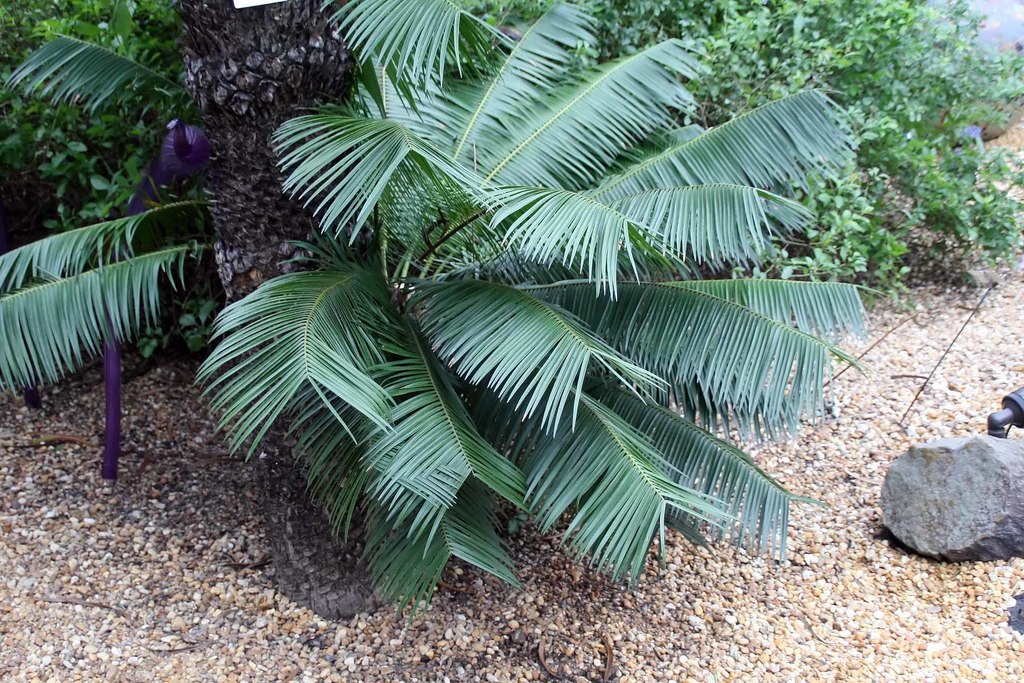 Oya artwork
Palma corcho looks like a palm and is often mistaken for one, but it is a cycad — a lineage far older than palms, or grasses, or flowers themselves. It is the sole species in its genus, endemic to a small corner of western Cuba. To stand before one is to look at deep time still growing.
Its crisis is unusually poignant. Microcycas depends on a single kind of beetle to carry pollen from male to female cones — a partnership refined over millions of years. Across most of its range that beetle is now effectively gone, and without it the plants cannot reproduce. They still stand; they still cone; but they set little or no seed on their own. Botanists can pollinate them by hand, yet a species that survives only by human hand-pollination is one whose own machinery has stopped. Around 600 plants remain, in habitat eaten away over generations by clearance for sugarcane, tobacco and cattle.[1,10]
Three pressures compound: conversion of its habitat to agriculture; collection of plants from the wild; and, most insidiously, the collapse of its pollinator, which severs natural reproduction even where adult plants persist. A plant can be standing and finished at the same time.
Held in cycad and botanic-garden collections internationally and in Cuba, where ex-situ propagation and hand-pollination help keep the species going. Wild populations in Pinar del Río are protected and sensitive.
Oya does not get to choose institutions built from scratch for conservation. It works with the ones history has left — gardens whose founding logic was extraction, whose collections were assembled to serve a trade in plants and in people, and which now hold some of the best remaining capacity to protect the very flora the plantation era helped to imperil. The Soufriere Tree survives because the empire's founding garden keeps it alive. The Barbados Cedar shows what that economy could erase outright. Spathelia coccinea is where Oya's own pilot now takes up the work. And Palma corcho is the long view. Holding both halves of this history honestly — neither romanticising the colonial garden nor disowning the institutions Oya now depends on — is the point.
Image credits